Prior to any renovation project—whether it involves a single rental unit or an entire building—there are many considerations and a great deal of planning involved for the landlord.
A large part of the considerations and planning concern the timing itself, partly because the shorter the time the apartment is unoccupied, the better.
This article discusses issues relating to "time" that landlords need to bear in mind during and after a project.
The rights of the landlord in connection with a project delay depend on what has been agreed and whether there is a delay in interim deadlines or delivery.
In addition to delays in interim deadlines or delivery, the landlord must also keep track of the time when defects are found in the work performed. This is because time entails a risk of expiry and thus the possibility of losing a claim for, among other things, rectification by the contractor.
As something new – which partly affects the statute of limitations – AB 18 regulates rules in the form of a "resolution ladder" when disputes arise between a client and a contractor.
The time ahead – the basis for agreement
First and foremost, the landlord must ensure that there is a sound contractual basis.
The parties involved in construction often use the so-called AB terms (AB 92/AB 18) with possible deviations/additions.
This article is based on AB 18.
Delays and daily penalties often go hand in hand – but only if daily penalties have been agreed upon, of course. In order to claim daily penalties, they must be agreed upon in the contract. It must also be agreed how the daily penalty is calculated and which deadline(s) trigger the daily penalty.
A daily penalty is a contractual penalty that is triggered by the contractor's delay, provided that there are no circumstances that entitle the contractor to an extension of the deadline, or the daily penalty claim is forfeited or invalid on other grounds.
An extension of the deadline for the contractor may be justified, for example, if the lessor has requested changes to the work (additional work), and forfeiture may occur if the lessor fails to complain, due to the statute of limitations, etc.
One advantage of agreeing on a daily penalty is that the landlord does not have to document the loss caused by the delay.
The disadvantage, if you will, is that this also means that no compensation can be claimed beyond the daily fine.
This means that if the daily penalty does not cover the landlord's actual loss due to the delay, this additional loss cannot be charged to the contractor, because only the daily penalty is payable.
The period during which complaints and notifications must be made
AB 18 § 40, subsection 4 stipulates the conditions under which a daily penalty may be imposed as a result of the contractor exceeding a deadline.
The conditions are:
- The deadline and daily penalty must be clearly stated in the agreement, including how the daily penalty is calculated.
- The exceeding of the deadline must be noted on an ongoing basis.
This can be noted by updating the schedules, stating whether the delay is a result of a requested or accepted deadline extension and whether the delay relates to a deadline that triggers a daily penalty. Updates to work and time schedules must be made at construction meetings and noted in the construction meeting minutes.
- The lessor must, within a reasonable time after becoming aware that the deadline will be exceeded, notify the contractor that a daily penalty will be imposed and from what date.
It is not a requirement that daily fines be calculated in relation to the expected excess.
The above conditions do not represent a complete overhaul of the rules we know from AB 92, but rather a codification of arbitration practice.
In other words: If the conditions for the agreed daily penalty are valid and fulfilled, the daily penalty must be paid.
If daily penalty-triggering deadlines have been agreed, it is a requirement that the deadline relates to the completion of an activity that is of crucial importance to the construction process or crucial to other significant circumstances.
As a landlord, medium-term options can be considered as part of getting tenants back into their rentals more quickly.
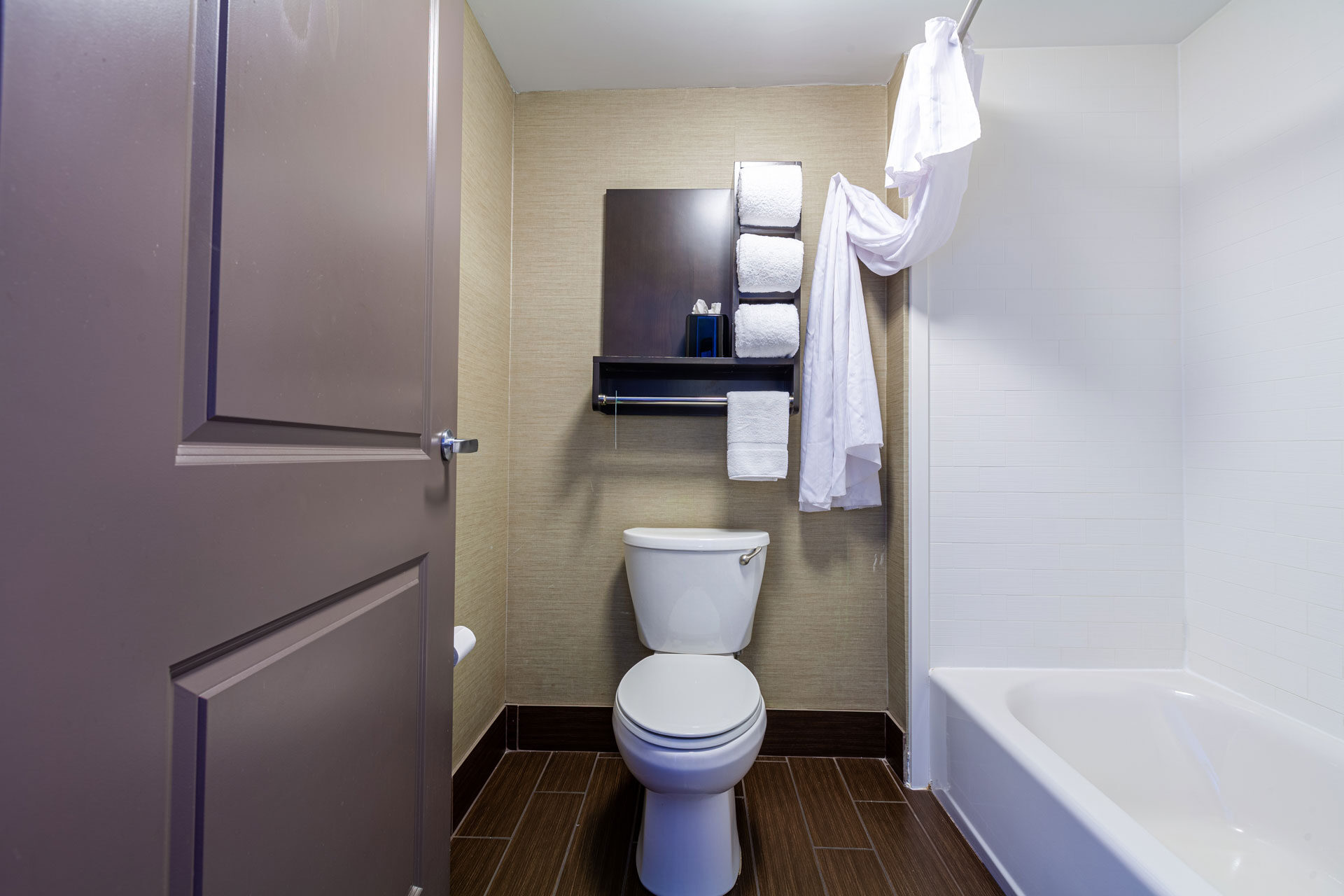
An example could be that the renovation project is planned so that the extensive renovation of the kitchen or bathroom must be completed at a specific time so that the tenants can return to the apartments before the final handover of the project, which, for example, is awaiting completion of work in the stairwells, roof, etc.

The period after delivery – handling of daily penalties
Once the contractor has completed and reported completion of the work, daily penalties can no longer be claimed or calculated from the date of delivery.
This presupposes, of course, that the work does not suffer from such significant defects that the landlord is justified in rejecting the completion report and handover.
Finishing and rectifying minor defects cannot prevent the contractor from completing and handing over the contract in a justified manner.
Interest may be charged in accordance with the Interest Act on the daily penalty requirement from the completion date, cf. section 3(1) of the Interest Act, which must be taken into account when the total financial settlement is to be made with the contractor.
The period after delivery – when defects are discovered
Sometimes, hidden defects are only discovered after the tenant has moved into the rental property.
In such a situation, it is important that a complaint is made to the contractor within a reasonable time.
It appears that the contractor wants the rectification to take place in connection with the 1-year or 5-year inspection, so that the contractor can fix "several issues" at the same time.
That's fine in principle – also for tenants, so that they don't have to put up with too many visits.
However, landlords should be aware that there is a difference between the contractor's liability period and the limitation rules under the Limitation Act.
According to AB 18, the contractor is liable for five years from the date of delivery, but this does not mean that the contractor can be held liable for five years, as the claim may become time-barred at an earlier date under the Limitation Act.
The general limitation period under the Limitation Act is three years, calculated from the date on which the defect was or should have been discovered. The absolute limitation period under the Limitation Act is ten years.
The fact that the landlord is dependent on the tenant informing them of any defects does not mean that the three years are calculated from the time when the landlord is informed of the defect by the tenant.
It is the contractor's burden of proof that any claim is time-barred if the contractor asserts that the circumstances were or should have been discovered at an earlier stage.
If there is a risk that the statute of limitations will expire, it is important to take steps to interrupt the statute of limitations before it expires. An expired claim cannot be revived.
The period after delivery – application of the solution ladder in AB 18 (§ 64)
Interruption of the limitation period pursuant to AB 18 can be achieved through a number of measures, but it is important to be aware of the solution ladder.
The solution ladder in § 64 is a change to the existing conflict resolution system known from AB 92. The rule is that negotiations must take place at several levels.
Any dispute between the parties shall be attempted to be resolved and settled through negotiation between the project managers (level 1), and if the dispute is not settled in this way, the parties' management representatives shall attempt to resolve and settle the disagreement (level 2).
If the disagreement is only discovered after delivery, you can skip the project managers (level 1) and start with the management representatives (level 2).
If the landlord has engaged a consultant, e.g. for construction management or technical supervision, it would be natural for this consultant to attempt to clarify and settle the matter at level 1.
The advisor must, of course, be equipped with a power of attorney specifying the terms under which the case can be settled. Alternatively, the advisor may make the agreement conditional upon the landlord's final approval.
If the dispute is not resolved at level 1, the management representatives will then meet.
It is possible that there is overlap at both levels, meaning that the same person participates at both level 1 and level 2. This may be the case for smaller construction companies, for example.
The solution ladder is a mandatory prerequisite for the process, which means that, among other things, no arbitration or arbitration proceedings can be initiated before the Arbitration Board for Construction and Civil Engineering until these steps have been taken.
It is recommended that the request for negotiation pursuant to Section 64 be sent in writing so that there is evidence that the rules have been observed.
A request for negotiation under the solution ladder (AB 18 § 64) is considered to temporarily interrupt the limitation period pursuant to § 21(5) of the Limitation Act, which means that an additional period of one year will be added from the date on which the negotiations are considered to have been concluded.
If the contractor refuses to participate in the negotiation meeting or does not respond to the request, the landlord must interrupt the limitation period in another way. This can be done, for example, by submitting a request for isolated evidence or a letter of complaint.
If the conditions are met, a request for a quick decision may also be made, or if the situation warrants it, a request for mediation or conciliation may be considered.
Time – what now?
The key points for a successful project can be summarized as follows:
- Ensure a sound contractual basis and agree on daily penalties – including for interim deadlines – if this makes sense for the project in question.
- Ensure that a written complaint and note are made prior to and during the delay.
- Be sure to observe the rules for the solution ladder and ensure that the statute of limitations is interrupted if no solution can be found.
If a dispute arises in connection with a construction project, it is recommended that legal assistance be sought so that a proper complaint can be made and evidence secured in a timely manner.
If you have any questions regarding the statute of limitations under the AB 18 rules in a commercial lease, you are always welcome to contactCLEMENS Law Firm's specialists in business lease law.
(We wrote this article forthe magazine Danske Udlejere, September 2021)