Proportional reduction of the purchase price is one of the most frequently used remedies in real estate defect cases.
The right of refusal can be used by the buyer under certain conditions when the value of the property with defects is less than the agreed purchase price for a defect-free property.
The proportionate reduction therefore consists of the amount that the buyer would have paid less if the buyer was aware of the defect in question in advance.
The overall framework for the proportional reduction has long been known, but the Supreme Court's new decision is interesting as it provides some detailed premises containing the elements that must be included in an assessment of whether the buyer is entitled to a proportional reduction in the purchase price.
The judgment therefore provides a good understanding of when the buyer is entitled to a proportionate reduction, and the judgment is another contribution to interpretation in the area.
Conditions for proportional refusal
It is not a prerequisite for a proportionate rejection that there is a basis for liability. The buyer can therefore assert a right of refusal against the seller regardless of the fact that the seller has not actually done anything for which he can be blamed.
However, it is a condition that there must be a significant defect.
The assessment of whether the defect is significant includes factors such as the nature of the defect (how serious is the defect) and an assessment of the size of the repair costs at the time of sale; both the absolute size and the size in relation to the purchase price.
This means, among other things, that case law has established a kind of monetary "de minimis limit" for when the buyer may be entitled to a proportionate reduction. However, the de minimis limit is not fixed, and it is always a matter of a specific assessment of the circumstances of each case.
Supreme Court ruling of April 30, 2024
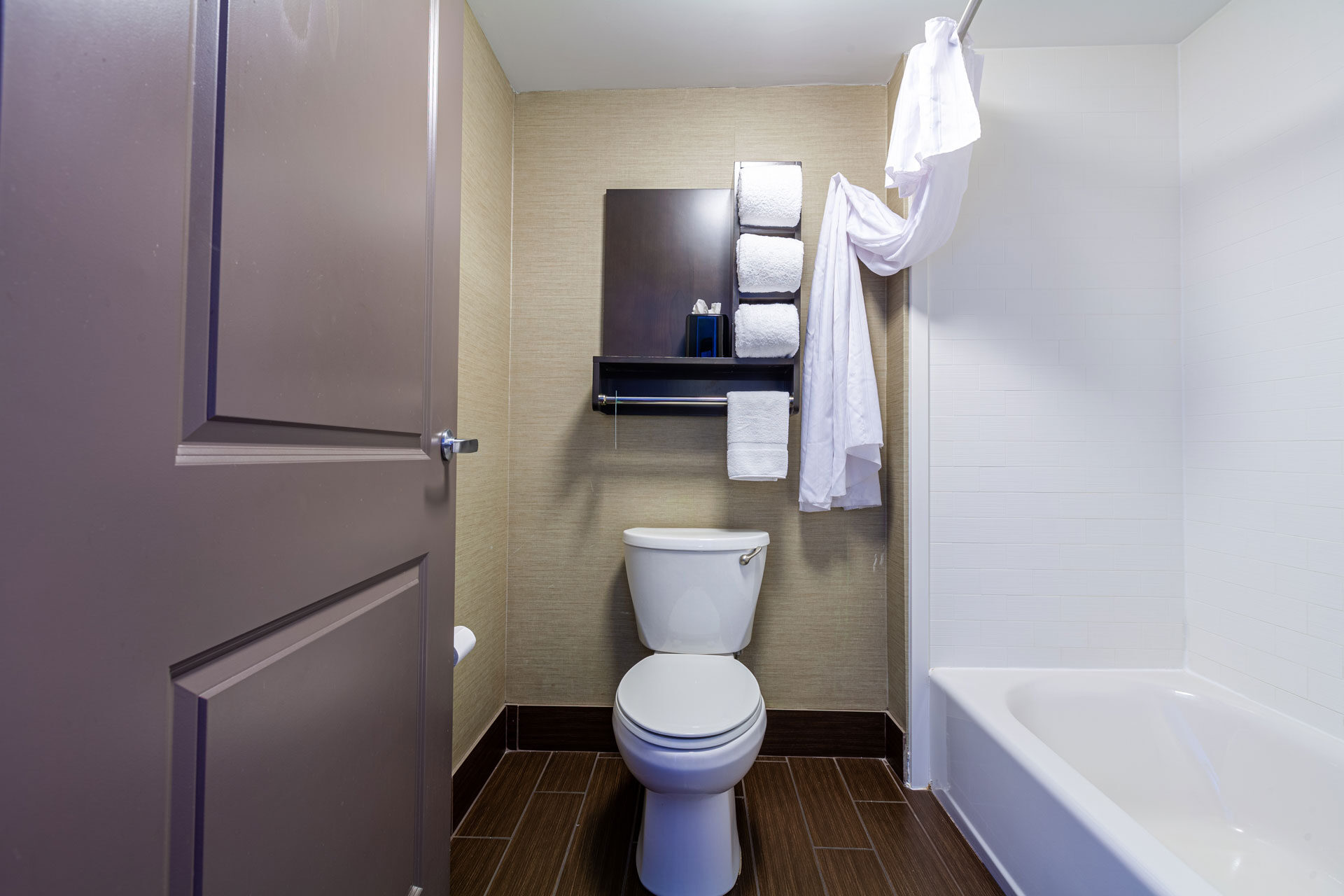
In the case in question, the buyers were not awarded a proportional discount for a defective bathroom in a condominium.
The Supreme Court's detailed premises are reproduced below:
The Supreme Court's reasoning and result
Case background and problem statement
In August 2019, A sold his condominium of approximately 62 m2 located in central Copenhagen to B and C for the asking price of DKK 3,195,000. The takeover date was September 1, 2019, and the apartment had no residency requirement.
The parties agree that there were defects in the bathroom. The appraiser has calculated the cost of repairs at the time of the transaction at approximately DKK 117,000 (DKK 130,000 less 10%) and the value of improvements at approximately DKK 40,000.
The case concerns whether B and C are entitled to a reduction in the purchase price.
A argued that B and C had not demonstrated that, with knowledge of the defects at the time of the transaction, they would have obtained a reduction in the purchase price. They bought the coveted apartment without negotiating the offer price, even though they had noticed cracks in the bathroom floor during the inspection prior to the purchase. Based on the appraiser's assessment of repair costs less improvements, a rejection would not exceed approximately DKK 80,000, corresponding to approximately 2.5% of the purchase price, which is below the de minimis threshold.
B and C claimed that the appraiser had found hidden functional defects in the bathroom, which they would be forced to repair in order to use the bathroom. The deduction from the purchase price must be calculated as the repair costs, which according to the appraiser amounted to approximately DKK 130,000. There is no basis for making deductions for improvements. There is no absolute de minimis limit for deductions.
Reduction in the purchase price
As stated in the Supreme Court's judgment of April 23, 2004 (UfR 2004.1873) and the Supreme Court's judgment of October 11, 2012 (UfR 2013.140), when deciding whether a buyer in a defect situation is entitled to a reduction in the purchase price, it must be based on whether knowledge of the condition would have led to a lower purchase price. The assessment must take into account the size of the repair costs at the time of sale - in absolute terms and in relation to the purchase price - as well as the nature of the alleged defect, e.g. on the one hand a significant and current illegality and on the other hand a defect that will not impair the usability of the property within a foreseeable period.
Based on the evidence, the Supreme Court finds that B and C noticed cracks in the bathroom floor during their inspection of the apartment prior to the purchase. The Supreme Court finds that they should therefore have assumed that the cracks needed to be repaired and that there could be moisture damage. They did not try to obtain a reduction in the tender price.
There is no basis for establishing that B and C knew or should have known about the hidden defects found in the form of, among other things, inadequate wet room protection in the bathroom.
The question is whether B and C have made it likely that, with knowledge of the hidden defects, they would have obtained a reduction in the purchase price for the resulting additional repair costs.
When calculating the repair costs at the time of sale, improvements must be taken into account according to the "new-for-old" principle. After the statements of estimate and the evidence in general, the Supreme Court finds that the repair costs with deduction for improvements can be estimated at DKK 80,000, corresponding to approx. 2.5% of the purchase price.
Against this background, the Supreme Court finds that it has not been made probable that knowledge of the hidden defects in the bathroom would have led to a reduction of the purchase price. It should also be noted that there is no basis for establishing that the hidden defects made the bathroom unusable.
The conditions for granting B and C a reduction in the purchase price are thus not met.
Conclusion
A is acquitted.
CLEMENS' comments
The premises of the judgment are very detailed and nuanced and contain the considerations that must be included in an assessment of whether the buyer is entitled to a proportionate reduction.
It is therefore an important extension of existing case law and an interesting interpretative contribution to future assessments of whether or not a proportionate refusal can be required.
As stated in the premises above, it is clear from the Supreme Court's judgment that the assessment must be based on whether knowledge of the circumstances would have led to a lower purchase price.
In other words - would the buyers have demanded a price reduction if they had known about the defect?
It is noted that it appears from the premises that the buyers, during their inspection of the apartment prior to the purchase, noticed that there were cracks in the bathroom floor, but that it could not be established that the buyers knew or should have known about the hidden defects found in the form of, among other things, insufficient wet room protection in the bathroom.
The Supreme Court found that the buyers should assume that the cracks had to be repaired and that there could be moisture damage. Nevertheless, the buyers did not attempt to obtain a reduction in the offer price.
It follows from the decision that the assessment of whether knowledge of the matter would have led to a lower purchase price includes factors such as:
1) the nature of the relationship - including the potential uses of the property, and
2) the amount of the repair costs at the time of trade with deductions according to the "new-for-old" principle.
Based on the decision, it is recommended that prospective buyers ensure that they conduct a thorough inspection of the property before purchase. Visible defects that may affect the purchase price should be identified and taken into consideration when negotiating the price. Buyers may also consider obtaining assistance for a professional building inspection of the property. The technical inspection can uncover any hidden defects and provide a better basis for any price negotiations.
Get help with construction law.
This judgment underlines the importance of professional advice in real estate transactions. At CLEMENS, we have specialists who can advise on all aspects of real estate transactions and defect cases.
We help assess whether there are grounds for a reduction in the purchase price and how best to handle such claims. Our experts can help ensure that all relevant information is available and properly assessed so that both buyers and sellers can make informed decisions.
If you have any questions about the case or about proportionate refusals and remedies for breach in general, you are welcome to contact Attorney in CLEMENS' construction law and real estate department.
Contact us for a no-obligation discussion