It is often the case that in the context of legal disputes, an inspection and assessment is carried out to determine whether, for example, a contractor's work is workmanlike or defective.
The assessment is made by an assessor, who is formally appointed by the court if the parties to the case have no legitimate objections to the assessor's professionalism or impartiality.
The appraiser must answer the questions posed by each party in a pre-approved appraisal questionnaire, where the appraiser typically issues an appraisal statement after conducting a physical inspection.
The parties to the case will usually want to participate in the arbitration so that they are in the best possible position to protect their own interests both during and after the arbitration.
In a recent judgment (U.2023.1471V), the Western High Court has considered the significance of the fact that an assessment hearing is held despite the absence of one of the parties to the case.
The facts of the case
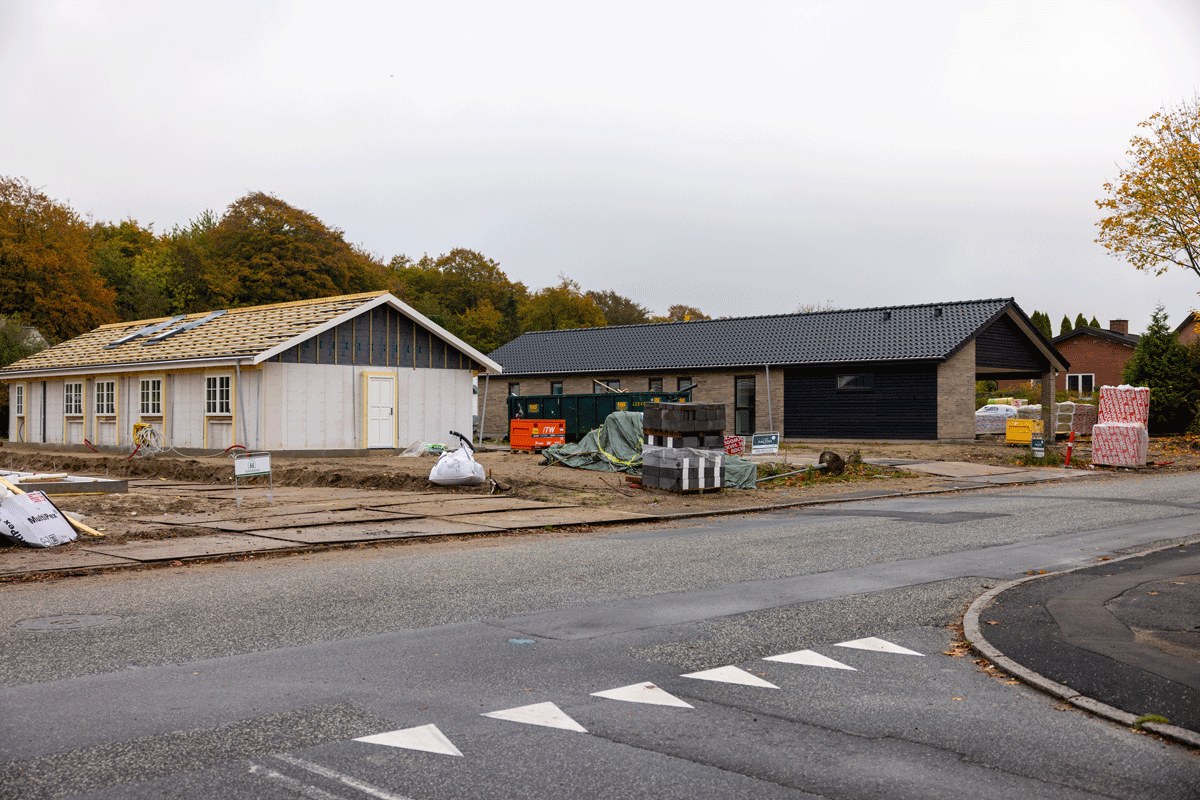
A builder had his roof replaced by a carpentry company owned by a master carpenter.
The client believed that the roof was defective, so an isolated evidence gathering was carried out in the form of an inspection and assessment.
The master carpenter, who was a representative of and was to attend on behalf of the carpentry company, had canceled the assessment meeting. However, the assessment meeting was held despite the cancellation and thus without the participation of any representative of the carpentry company.
The carpentry company therefore claimed that the appraisal statement should not be included in the case, but that a new inspection and appraisal should be announced instead. This should be with a different assessor, because the first assessor, according to the carpentry company, had been disqualified.
According to the carpentry company, the disqualification was partly due to the wording of the questions, where the assessor was asked to agree or disagree with the content of a report obtained by the client, and partly by holding the assessment meeting despite the master carpenter's absence.
According to the carpentry company, this also had the consequence that the carpentry company had not had sufficient opportunity to safeguard its interests.

Order of the district court
The carpentry company had requested the district court that the existing appraisal report should be deleted from the case and that a new inspection and appraisal should be carried out by a new appraiser, as the first appraiser, according to the carpentry company, had been disqualified.
The developer objected to this.
First and foremost, the District Court noted that the carpentry company had not protested against the wording of the client's questions to the valuer prior to the valuation meeting. On its own initiative, the District Court considered the wording of the questions and did not find that they gave reason for the statement of opinion to be deleted.
There were no other circumstances indicating that the assessor had answered the questions inadequately or without the necessary professional competence.
Against this background and because the carpentry company had had the opportunity to ask additional questions to the appraiser, the request for a new inspection and appraisal by a new appraiser was not granted.
The high court's ruling
The district court's decision was appealed by the carpentry company to the Western High Court, which generally agreed with the district court.
Like the District Court, the Western High Court concluded that the carpentry company had had sufficient opportunity to safeguard its interests despite the fact that the inspection and assessment was carried out without the presence of the master carpenter.
In this connection, the Western High Court also emphasized that the carpentry company, pursuant to section 205 of the Danish Administration of Justice Act, could still request the district court for access to ask supplementary questions to the expert or conduct a supplementary expert opinion.
In its ruling, the Western High Court expressly emphasized that it is the starting point of the Danish Administration of Justice Act that it is the assessor who notifies the place and time of the assessment hearing, and that a party may complain about an assessor's procedure by contacting the court that appointed the assessor, which may then order the assessor to change or supplement the assessment hearing.
The Western High Court then made a subtle criticism of the carpentry company, as the Western High Court pointed out that the appraisal meeting (which the master carpenter canceled) was held on June 15, 2022, and that the appraisal statement was submitted on July 4, 2022, but it was not until September 8, 2022, that the carpentry company objected to the appraisal meeting being conducted without the participation of the master carpenter.
Nor did the Western High Court find any other basis for the carpentry company's claim that the assessor had to be considered disqualified.
Therefore, the carpentry company's request for a new inspection and estimate to be announced and for the original estimate to be removed from the case was not granted.
What does it mean in practice?
With its ruling, the Western High Court has confirmed that it is not a condition for holding an assessment meeting that the parties to the case participate - and a cancellation by one of the parties therefore does not automatically mean that a subsequent, completed assessment meeting will be rejected.
The Western High Court's remarks that the carpentry company did not submit an objection until more than 2 months after the statement of estimate was available may indicate that the legal position may be different if the prevented party reacts immediately and the appraiser has otherwise behaved in a way that gives rise to the appraisal being reversed or supplemented.
If you need advice or have questions about how to conduct a survey, you are always welcome to contact CLEMENS' experts in litigation and arbitration.